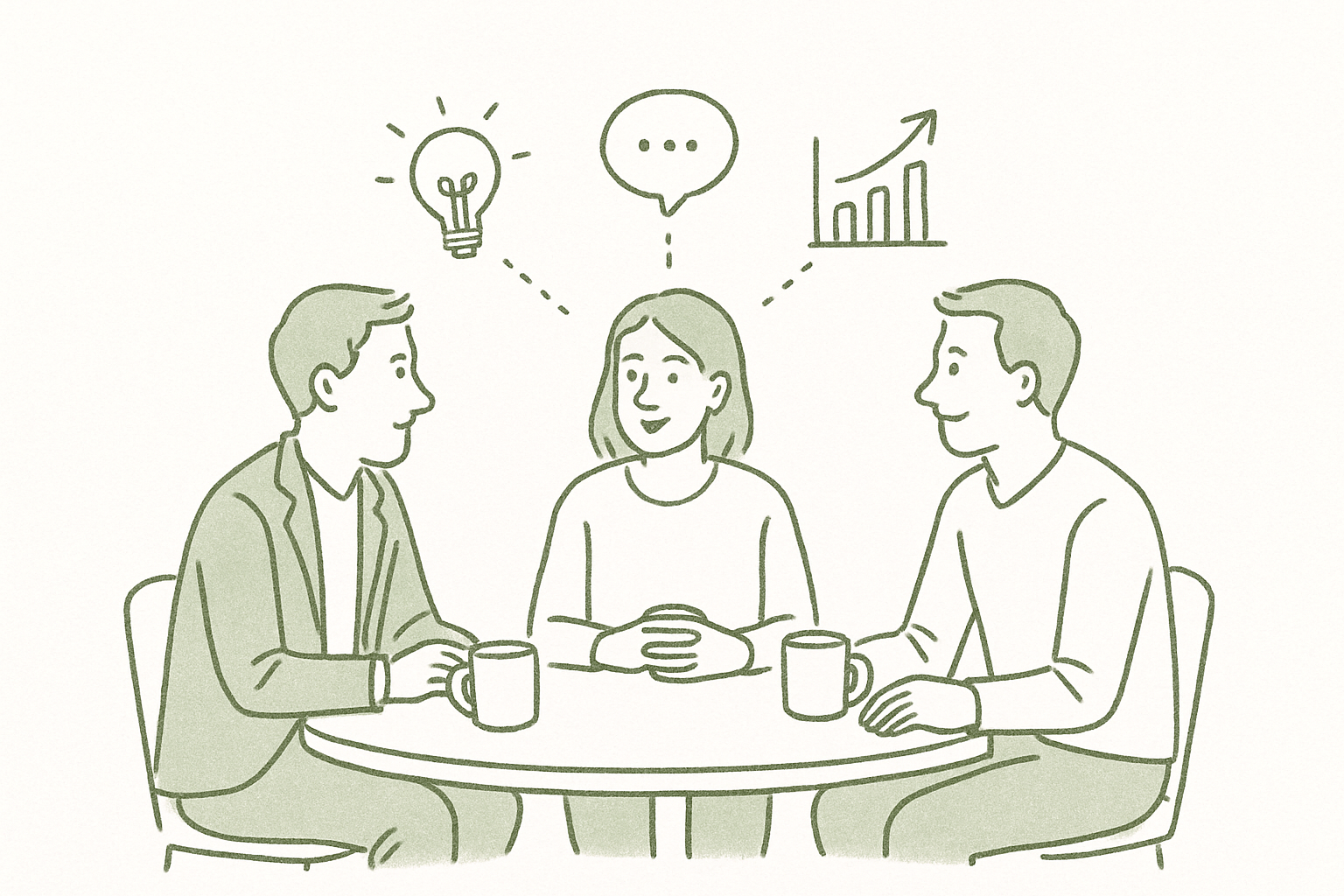
Building a company by yourself is one of the stranger forms of isolation humans have invented. You're technically never alone — there are customers, vendors, maybe a small team — but the decisions land on one person. The doubt lives in one brain. The 3am revenue panic has one address. The same structural problem shows up across every type of independent builder: solo founders, solopreneurs, and content entrepreneurs who mistake a large audience for a peer group.
Co-founders split that weight. Solo founders carry it whole. And the data on what that does to people is not encouraging.
A 2019 Blind survey of 11,000 tech workers found that 57% of respondents reported feeling lonely at work. Founders consistently scored higher than employees. And solo founders — the ones without a co-founder to process the day with — reported the highest rates of all. The startup mythology says this is the price of independence. But that's just a story we tell to make the isolation feel intentional.
The co-founder you can't hire
What co-founders actually provide isn't just labor. It's witness. Someone who knows what the past six months cost. Someone who can say "that's actually a good problem" when you've been staring at it so long you've lost all perspective. Someone who can tell you you're spiraling before the spiral becomes a decision.
You can't hire that. A COO is downstream of you. An advisor has one-tenth the context. A therapist can help with the emotional processing but doesn't know what a 35% churn rate actually means for your specific runway. What solo founders are missing isn't professional services — it's peers.
Peers who are building at the same altitude. Who have made the same call you're about to make and can tell you what happened. Who will hear your plan and not just nod because they need you happy.
Why most support systems don't work
The default support options for solo founders are weak substitutes. Twitter communities give you dopamine, not accountability. Slack groups are fine until they're not — too big, too noisy, too many people promoting things. Meetups are networking events wearing the costume of community. You go, you swap cards, you leave.
What actually works is small. Research on peer support effectiveness consistently points to groups of five to eight people as the upper bound for real psychological safety. Above that, you're performing. Below five, you lose the diversity of experience that makes the room useful.
And it has to be structured enough that you actually talk about the real things. Left to their own devices, people talk about the surface stuff — product decisions, hiring tactics, fundraising mechanics. The structure is what creates space for the harder conversation: what's actually keeping you up at night.
What the research says happens when founders find their people
The EO (Entrepreneurs' Organization) has been running structured peer groups for founders for over 30 years. Their internal research shows that members who participate in Forum — their small peer group format — consistently outperform non-Forum members on revenue growth, company survival, and self-reported wellbeing.
The mechanism isn't magic. It's repeated contact, shared context, and a commitment to honesty that professional relationships rarely permit. When you meet with the same six people every month for two years, they stop being acquaintances. They become the people who can actually help you.
The research on mastermind groups tells the same story. A longitudinal study of business mastermind participants found that 84% reported making better decisions after joining, and 76% attributed at least one major company milestone directly to insights from the group. Not tactical tips — actual decisions that changed the trajectory.
The format that actually works for solo founders
The solo founder peer group format that works looks like this: same five to eight people, monthly, two to three hours, with a structured hot seat format that gives each person real airtime on a real problem.
The hot seat matters. It's not a status update. It's one person bringing their biggest current challenge to the group, getting challenged on their assumptions, and leaving with something concrete. The group doesn't solve your problem for you — they help you see it clearly enough to solve it yourself.
Between sessions, the best groups maintain the connection. Not a Slack group where people post articles — actual check-ins. Brief, direct: what are you working on, what's in your way. The accountability thread that keeps the group alive between meetings is often where the most useful work happens.
The thing nobody says out loud
The hardest part of solo founding isn't the technical problems. It's the uncertainty maintenance — carrying the weight of not knowing if this is going to work, every single day, while projecting confidence to customers and team members and investors who need you to seem sure.
That performance is exhausting. And it compounds. The longer you maintain it without relief, the more isolated you feel, and the worse your decisions get. Research on decision fatigue consistently shows that people under chronic stress make more short-term, lower-quality decisions. Solo founders are structurally at risk.
A peer group doesn't eliminate the uncertainty. It gives you somewhere to put it down for a few hours and let other people carry it with you. That's not soft — that's structural. The ones who last longest have figured out that sustainable building requires a room where you can be honest.
You don't have to build alone. And if you're honest with yourself, you know you're not actually better off trying.
Related reading
GoodGrowth runs peer groups for founders
Small groups, structured format, real accountability. If you're building alone, you don't have to keep doing that.
Text (716) 590-9748