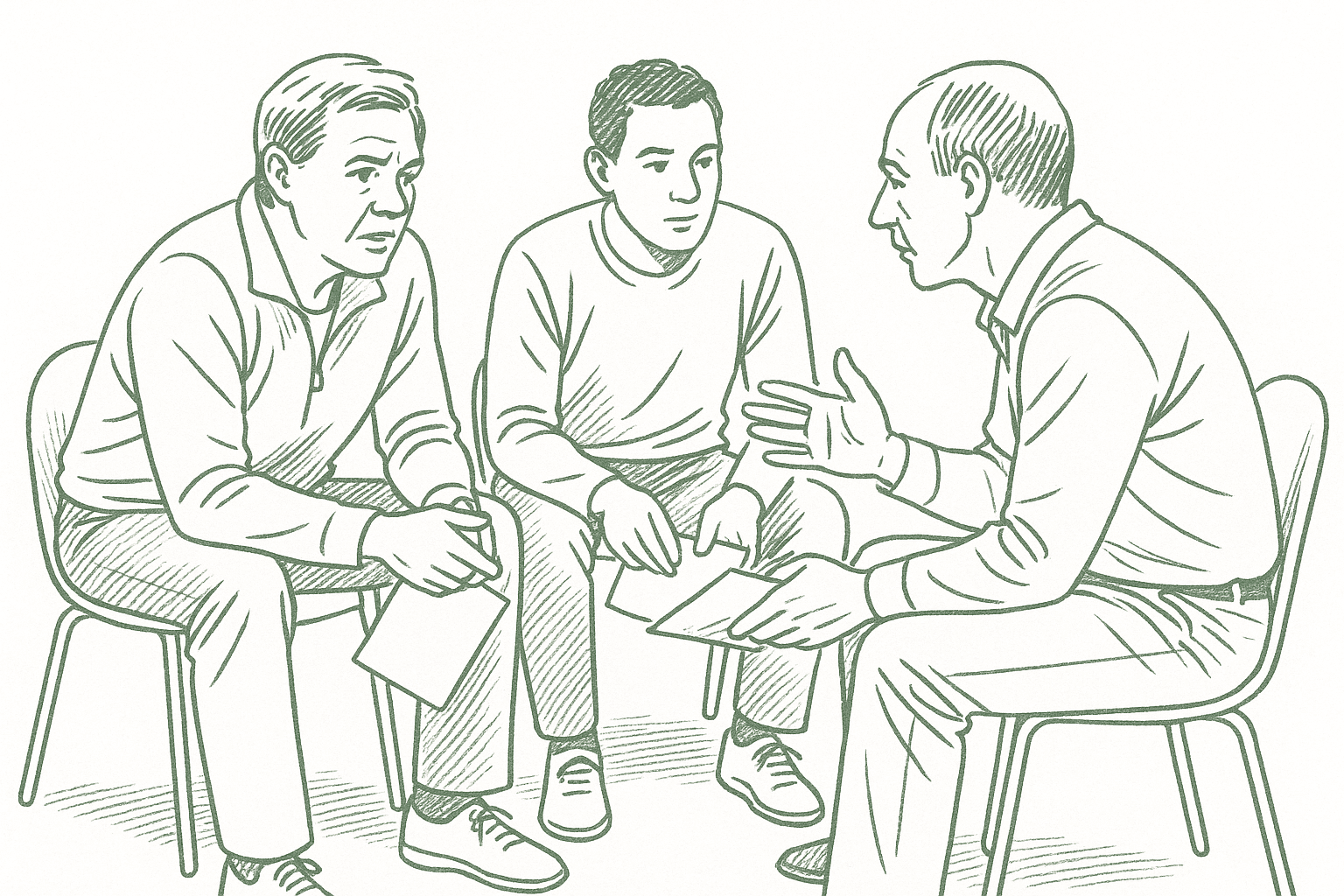
There is an obvious irony at the center of the coaching profession. Coaches exist to help people see their blind spots, challenge comfortable assumptions, and move faster with accountability. Then those same coaches go home, open their laptops, and run their businesses entirely alone.
The ICF's 2023 Global Coaching Study surveyed over 14,000 practitioners. The average coach earns $52,800 annually. In North America, that number climbs to around $67,800 — but the variance is enormous. Only 29% of coaches earn more than $100,000 per year. One-third work part-time alongside another job. The median is a solo practice with 12-13 clients, a full calendar, and no one to talk to about whether any of this is priced correctly.
This isn't a talent problem. The coaches who plateau aren't worse coaches than the ones who break through. They're operating in the same structural isolation that limits performance in every professional context — and they know better than almost anyone what the fix looks like, because they sell it to clients every day.
The Saturation Problem Nobody Is Talking About Honestly
The US business coaching industry generated $16 billion in 2025 — more than double its 2016 size. That growth is real, but it has also flooded the market. There are now more than 232,000 coaches in the United States alone, according to a 2025 industry report. The ICF's own data shows the global number of coach practitioners rose 15% between 2023 and 2025.
More coaches competing for the same clients means differentiation is everything. But differentiation requires decisions — about niche, about positioning, about pricing, about which offers to build and which to retire. These are not coaching decisions. They are business decisions, and they require external intelligence that most coaches simply don't have access to.
What does someone at your level charge for a VIP day? Which client profiles are worth the time and which quietly drain you? Is group coaching actually more scalable for your model or just another shiny object? These questions don't have universal answers. They have answers that depend on your market, your positioning, and your capacity — and the only way to calibrate them accurately is to talk honestly with people doing adjacent work who have no reason to compete with you.
The Capacity Ceiling Is Not a Time Problem
Research on coaching business benchmarks consistently shows coaches hit a hard ceiling at 20 to 30 active clients. Above that threshold, quality degrades and burnout follows — a pattern that's even more acute for therapists navigating the same isolation. Client delivery alone consumes 40-50% of a coach's working hours. Administration, marketing, and sales absorb the rest. At full capacity, there is no time left for the business development work that would build something past the ceiling.
The coaches who break past this ceiling — who move from a capped practice into something that genuinely scales — almost never do it alone. They have access to information about what's working. A peer who tried a group program and can tell you exactly what broke. Someone who restructured their offer around retainers and can show you what the math actually looked like. The research on isolated decision-making is unambiguous: without trusted peers pressure-testing your thinking, you default to what's familiar over what's correct.
A structured peer group doesn't add to your calendar. It replaces the unproductive hours you're already spending — circling the same decisions alone, hesitating on price increases you already know are warranted, staying in client relationships you should have exited six months ago.
What Coaches Specifically Need
Coaching peer groups work differently than founder peer groups or consultant peer groups. The specific value they deliver clusters around three things.
Pricing honesty. The coaching market has enormous rate variance, and most coaches have no reliable way to calibrate where they sit. Coaches routinely undercharge — not because they lack confidence in their work, but because they lack comparison data. A non-competing peer group is where that data actually exists, shared by people who have every reason to be accurate.
Business model evolution. The move from one-on-one sessions to group programs, from hourly to retainer, from generalist to niche — these are the decisions that determine whether a coaching practice grows or grinds. They are also the decisions that are hardest to think through alone, because they require accurate models of how similar practitioners have navigated the same transition. Community doesn't produce this kind of exchange. Structure does.
Referral trust. The most valuable referrals in the coaching industry come from peers who know your work well enough to say, specifically, why someone should hire you. That kind of referral requires depth of relationship that conferences and LinkedIn connections don't produce. Large networks generate noise, not signal. Small, consistent, non-competing peer groups build the depth that generates the referrals that actually convert.
The Accountability Asymmetry
Coaches understand the accountability mechanism better than almost anyone else in business. They know that the gap between deciding and doing is not a motivation problem — it's a structural one. Humans need witnesses. We need someone to ask whether we did the thing we said we would do.
And then most coaches go home and run their businesses without that structure for themselves. It's not hypocrisy. It's a structural gap. The coach has someone to be accountable to for their clients' progress. Nobody has signed up to hold the coach accountable for their own.
The coaches who build practices that actually last have usually solved this through some combination of their own coach, a mastermind group, or a peer advisory circle. The common thread is consistent external accountability from people who understand the specific dynamics of running a coaching business — not a general business coach, not a supportive friend, but peers with relevant experience and skin in the same game.
What to Look For
The structure matters. The highest-performing coach peer groups share a few consistent features.
Non-competing members across specialties or geographies. An executive coach, a health coach, a sales coach, and a career coach can share pricing intelligence and referrals freely because they're not competing for the same clients. The candor that produces value requires this safety.
Consistent format with real accountability. Groups that run on vibes don't last. The ones that produce measurable outcomes have defined meeting rhythms, structured hot seats, and someone asking at every meeting whether you followed through on your commitments. The answer has to matter — even if the only consequence is explaining yourself to five people who know exactly what you're avoiding.
A commitment to honest feedback over validation. This is the hardest thing to assess before you join, and the most important. The coaches who get the most out of peer groups aren't the ones in the groups where everyone affirms each other. They're in groups with enough trust built to say directly: that positioning is unclear, that price is too low, that client is not worth the grief. Building that trust takes time and structure — it doesn't happen by default.
GoodGrowth builds structured peer groups for coaches and independent professionals who want real accountability and honest peers — not another community that goes quiet in week three. Groups are forming now.