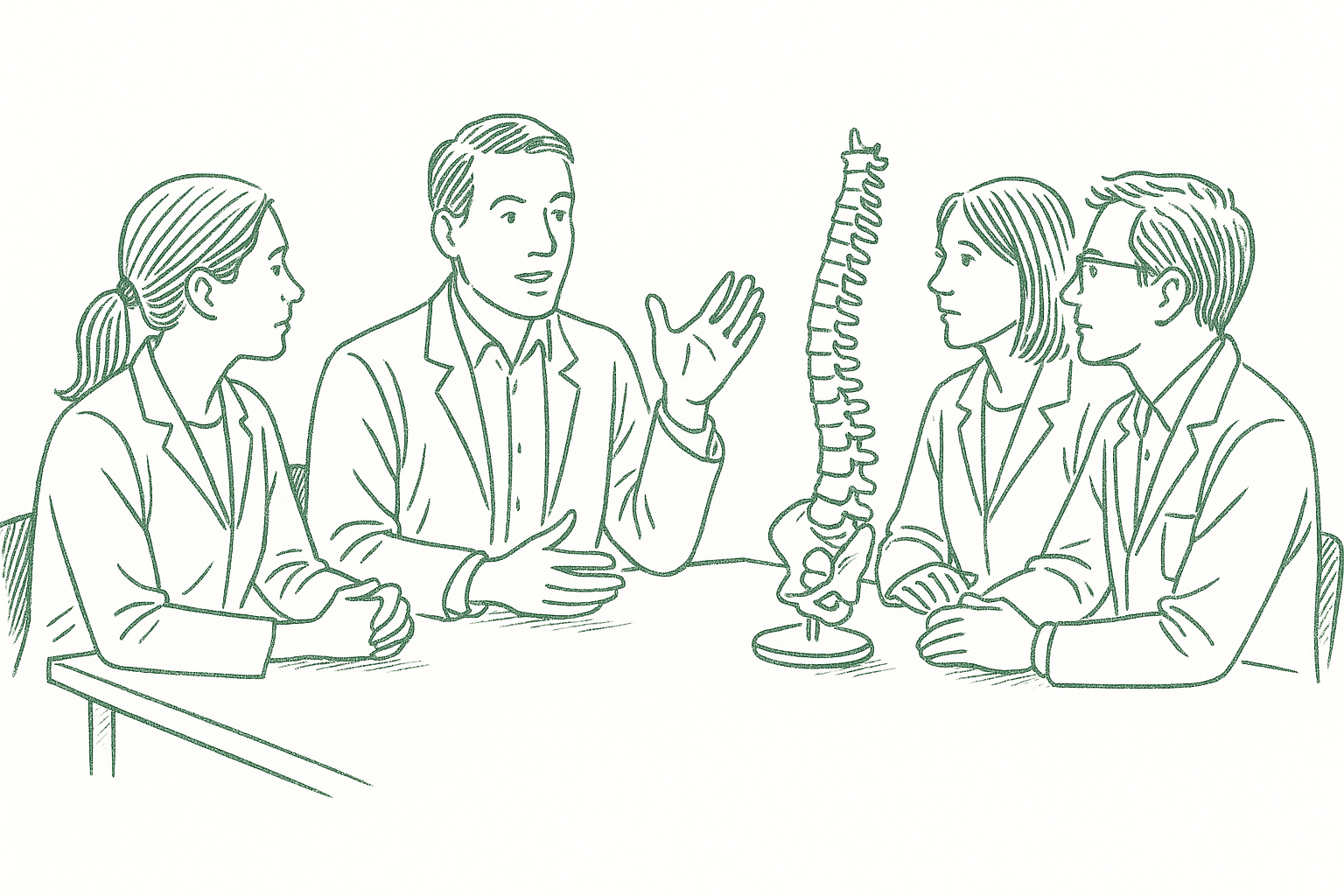
There are approximately 70,000 licensed chiropractors in the United States, according to the American Chiropractic Association. They treat more than 35 million patients annually across a $21.9 billion industry that is growing faster than most healthcare segments. Job growth is projected at 10% from 2023 to 2033, nearly double the national average for all occupations.
These numbers suggest a profession in excellent health. The reality behind them is more complicated. The Chiropractic Economics Annual Fees and Reimbursements Survey consistently finds that 70% of chiropractors work solo, with no other DC in the office. Forty-one percent work with no other specialists of any kind. And the average chiropractor receives just 57% of what they bill to insurance, according to CareCredit's 2024 analysis of reimbursement data.
That means the typical chiropractic practice is a solo operator collecting roughly half of what they charge, running a complex small business with no business partner, no advisory board, and no structured peer feedback of any kind. They spent eight years training to be clinicians. Nobody taught them how to be CEOs.
The isolation is structural, not personal
A 2024 scoping review published in Chiropractic & Manual Therapies examined burnout across the profession and found that the most common drivers had nothing to do with clinical work. Insurance regulations (33%), insurance reimbursement (26.8%), scope of practice issues (21.3%), and business and administrative duties (16.4%) topped the list. The clinical work was fine. The business of running the practice was the source of exhaustion.
An earlier study in PMC framed the problem in structural terms: chiropractors face burnout because of "the autonomous and isolated nature of their practices; their strong reliance on technical skills; their dependence on third-party reimbursements; their constant contact with people and the connected emotional involvement with clients." The researchers noted that many practitioners also assume the role of private business owner, which involves "personal financial risk and a significant dependence on third-party reimbursements."
This is the compound stressor. You are simultaneously a clinician seeing 20 to 30 patients a day, a business owner managing payroll and overhead, an insurance negotiator fighting for reimbursement, and a marketer trying to generate new patients. In a solo practice, you are all of these people. And you are making every significant decision alone.
Alpha Omega Consulting, a chiropractic coaching firm, published findings in 2026 specifically on isolation and practice growth: "Many owners isolate themselves unintentionally. They believe they should already know how to handle every leadership challenge internally. That mindset creates unnecessary pressure." The firm found that practices with access to outside perspectives and peer collaboration consistently made better operational decisions than those managed entirely alone.
What chiropractors actually solve in peer groups
The problems that keep chiropractors up at night are remarkably consistent across practices. They are also remarkably solvable once you have access to a peer who has already solved them.
Insurance mix and reimbursement strategy. The single most consequential business decision a chiropractic practice owner makes is which insurance plans to accept, which to renegotiate, and when to move toward cash-based services. At 57% average reimbursement, every in-network plan is a calculation between volume and margin. A peer who successfully transitioned three plans to out-of-network in a similar market and can walk you through patient retention is worth more than any billing consultant. This is the same dynamic that makes peer groups transformative for SaaS founders — specific operational knowledge, shared without agenda.
Patient volume and retention. The average chiropractor sees between 80 and 120 patient visits per week. The spread between the bottom quartile and the top quartile is enormous. Peer groups make that spread visible. When you sit across from a practitioner who sees 140 visits a week and they explain their recall system, their scheduling structure, and their case acceptance process, the gap between "I am doing fine" and "I am leaving significant revenue on the table" becomes concrete and actionable.
Associate and staff economics. Hiring an associate is the most common growth lever for a solo chiropractor, and the most common source of regret. Compensation structures, production expectations, non-compete clauses, mentoring obligations — the variables are complex and the stakes are high. A peer group where multiple members have hired, managed, and in some cases lost associates provides a dataset no individual practitioner can generate alone.
Technology and EHR decisions. Practice management software, digital X-ray systems, laser therapy equipment, decompression tables. The technology stack in a modern chiropractic practice can represent a six-figure capital investment. The difference between the right decision and a $40,000 mistake is often the experience of a peer who implemented the same system six months earlier and can tell you what the sales rep did not.
Scope expansion. Many chiropractors are expanding into functional medicine, nutrition counseling, regenerative therapies, or corporate wellness programs. These are not clinical decisions — they are business model decisions with regulatory, staffing, and marketing implications. Accountability from a peer group turns a vague intention to "look into functional medicine" into a specific timeline, a specific compliance checklist, and a follow-up conversation where the group asks what happened.
The math on one honest conversation
The median chiropractor earns $76,530 per year. The top 10% earn more than $142,580. The gap between median and top decile is not explained by clinical skill alone. It is explained by business decisions — pricing, insurance mix, patient retention, staff leverage, overhead management — that compound over years.
A chiropractor who discovers through peer benchmarking that their overhead ratio is 8% above market norm and corrects it across a $500,000 practice recaptures $40,000 per year. A practitioner who learns a patient reactivation system from a peer that recovers 15 dormant patients per month adds $3,000 to $5,000 in monthly collections. A solo owner who gets talked out of a premature second-location lease avoids a $200,000 commitment they were not ready to service.
But the deepest value is not any single insight. It is the compounding effect of making slightly better decisions, slightly faster, across every dimension of practice management. The peer effect is well documented by economists: the people around you literally change your outcomes. Not metaphorically. Measurably.
What to look for in a chiropractic peer group
Not all groups produce results. The ones that do share specific structural traits.
Non-competing geography. When two chiropractors compete for the same patients, they hold back. When they operate in different markets, they share everything — fee schedules, staff compensation, marketing spend, patient acquisition costs. Effective groups enforce geographic separation so every conversation can be fully transparent.
Practice-stage matching. A new graduate navigating their first year of ownership faces completely different problems than a multi-location owner managing three offices. The most useful groups match members by practice stage and revenue so the advice is immediately actionable. A smaller, well-matched group outperforms a large, loosely connected network every time.
Financial transparency. The groups that move the needle are the ones where members share real numbers. Collections per visit, overhead percentages, new patient acquisition cost, case acceptance rates. Without data, the conversation is anecdotal. With data, it becomes diagnostic.
Structured accountability. Hot seats, action item reviews, regular meeting cadence. The 300-year history of effective peer groups shows that structure is what separates a productive mastermind from a social club. Every member leaves with commitments. Every meeting starts by asking what happened with last time's commitments.
The profession is changing. The solo model is not enough.
Chiropractic is growing. The market is projected to reach $37.7 billion globally by 2034 at a 7.8% CAGR. Employment is expanding. Patient demand for non-invasive, drug-free pain management is rising. But the economics of solo practice are getting harder, not easier. Reimbursements are declining in real terms. Administrative burden is increasing. Competition from corporate wellness, physical therapy chains, and integrated health systems is intensifying.
The chiropractors who will thrive in this environment are not necessarily the best clinicians. They are the ones who recognize that clinical skill is necessary but insufficient — that the business problems they face are solvable, just not alone.
Seventy percent of chiropractors work solo. That does not mean 70% have to think solo. The profession has 70,000 practitioners in the United States. The ones who join structured peer groups get access to something chiropractic school never provided and continuing education never delivers: honest, specific, accountable conversations about the business of chiropractic with people who have no reason to sell them anything and every reason to help them succeed.
That is not a luxury. In a $21.9 billion industry where the average practitioner collects 57 cents on every dollar they bill, it is a competitive requirement.