Elliot Aronson had a problem. He was a social psychologist at the University of Minnesota in 1966, and he wanted to understand something that seemed to contradict everything rational about human attraction: why do we sometimes like competent people more after they screw up?
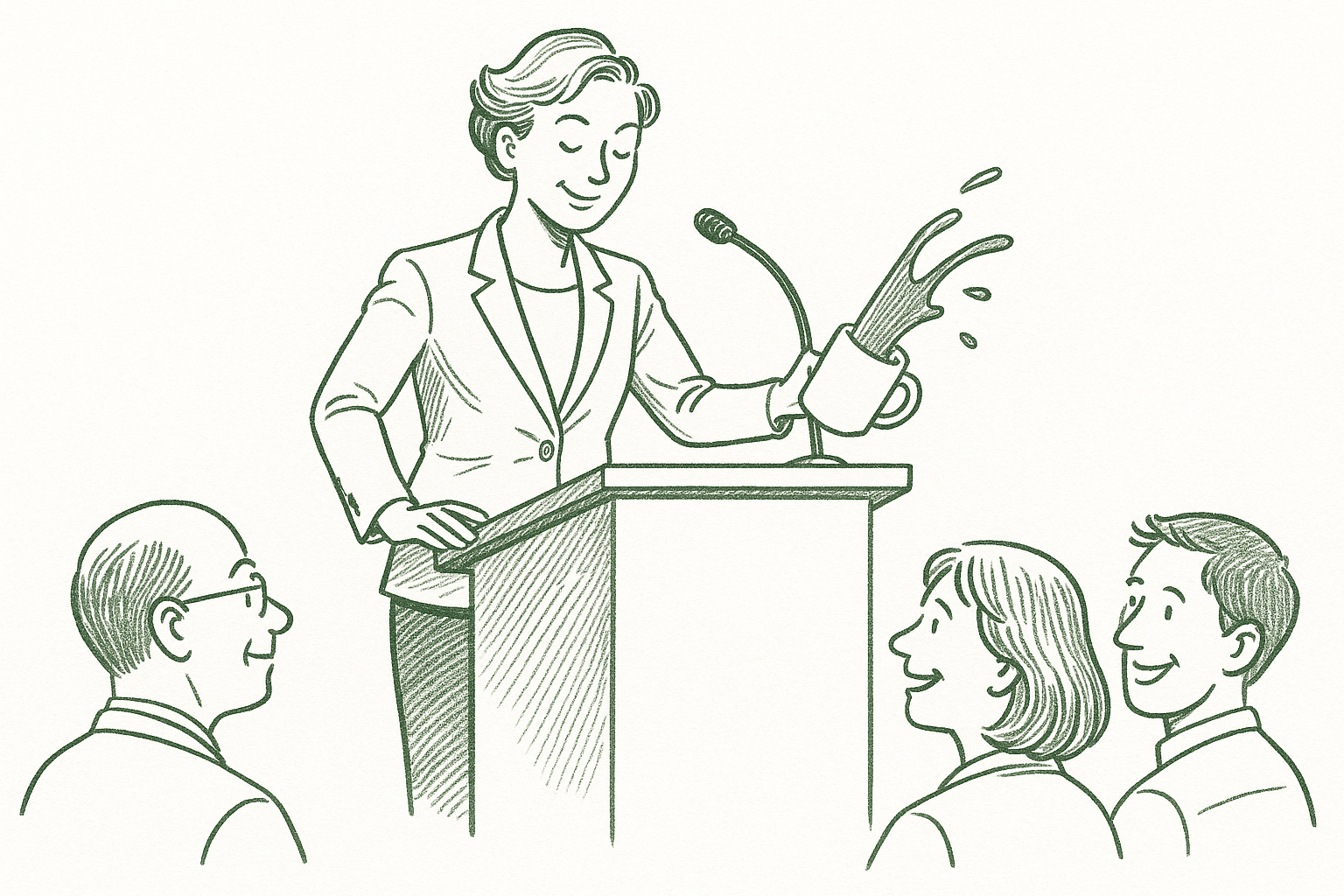
His experiment was elegant. Forty-eight male students listened to audio recordings of a person answering quiz questions. In one condition, the person answered 92 percent of the questions correctly — obviously brilliant, clearly competent. In another, the person answered only 30 percent correctly — plainly average. Then Aronson added a twist. On some of the recordings, the person spilled a cup of coffee on themselves. A clumsy, embarrassing, entirely human mistake.
The results were unambiguous. When the highly competent person spilled the coffee, participants liked them more than the equally competent person who did not spill anything. The mistake made them more attractive, more approachable, more human. But when the average person spilled the coffee, participants liked them less. The same mistake that humanized the expert diminished the mediocre.
Aronson called it the Pratfall Effect. And six decades later, it remains one of the most consistently replicated findings in social psychology — with implications that most founders, CEOs, and leaders have completely ignored.
Why competence without vulnerability reads as arrogance
Aronson's explanation was disarmingly simple. A person who demonstrates high competence without ever revealing a flaw creates psychological distance. They seem superhuman, which sounds like a compliment until you realize that superhuman also means unreachable, unrelatable, and ultimately untrustworthy. The coffee spill collapses that distance. It signals: I am extraordinary at what I do, and I am still a person who makes messes. That combination — competence plus fallibility — is what produces genuine trust.
The implications for leadership are well-documented. A 2023 study published in Personnel Psychology found that leaders who admit mistakes are perceived as more trustworthy, more approachable, and more supportive by their teams. The admission does not diminish their perceived competence — it humanizes it. Researchers at McKinsey have called this the vulnerability-trust loop: when a leader shows vulnerability, it gives permission for others to do the same, which accelerates the trust that makes teams actually function.
Brené Brown's decade of research at the University of Houston reinforces the same finding from a different angle. In her framing, vulnerability is "our most accurate measure of courage." But she adds a critical qualifier that most people miss: vulnerability only works within boundaries and established trust. Sharing openly without earned trust reads as recklessness. Competence without vulnerability reads as arrogance. The combination — demonstrated ability plus authentic fallibility, delivered inside a trusted container — is what unlocks genuine connection.
This is not soft leadership advice. This is structural. The groups where people perform competence without admitting failure are the groups where nobody gets honest feedback, nobody surfaces real problems, and nobody actually grows.
The founder performance trap
Most founders walk into peer groups — masterminds, advisory boards, YPO forums, EO chapters — with their armor on. They share wins. They discuss "challenges" in language so sanitized it could be a press release. They present the version of themselves that would survive a board meeting.
This is rational behavior. Founders are trained to project confidence. Investors reward it. Employees need it. Customers expect it. The performance of competence is a survival skill. But the Pratfall Effect says it is also a trust killer.
When every person in a group is performing competence without revealing failure, everyone privately assumes they are the only one struggling. The group becomes a stage, not a workshop. The conversations stay at the level of strategy rather than descending into the uncomfortable, specific, actionable territory where growth actually happens. Nobody mentions that they have not slept in three weeks because their cofounder wants out. Nobody admits that their biggest client is about to churn and they have no pipeline to replace the revenue. Nobody says the thing that would make everyone in the room lean forward and say: okay, now we are talking about something real.
Aronson's research explains exactly why. The person who has demonstrated competence and then reveals a failure becomes more attractive — more trusted, more listened to, more influential. But this only works if the competence has already been established. Which is precisely the dynamic of a well-run peer group: you are in the room because you have earned the right to be there. Everyone knows you are capable. That baseline is already set. What the group needs from you now is the coffee spill.
The research on what happens when leaders actually admit failure
Frauke Meyer's 2017 research at the University of Auckland studied what happens when leaders disclose their own contributions to problems they are trying to resolve. Her team analyzed conversations between 27 educational leaders and their staff, looking specifically at moments when leaders acknowledged their own mistakes.
The finding was striking: when leaders disclosed their own contribution to a problem, it triggered reciprocal disclosure from the other person. The conversation shifted from defensive to collaborative. The problem got solved faster and more completely because both parties were working with full information instead of guarded positions. Meyer called this "epistemic vulnerability" — the willingness to be honest and open to learning by accepting your own fallibility.
This maps precisely onto what happens in effective peer groups. When one founder sits in the hot seat and says "here is what I got wrong," it does not diminish them. It gives everyone else permission to do the same. The group's collective intelligence becomes accessible because the barrier to honesty has been removed. Dirks and Ferrin's meta-analysis of trust in leadership, published in the Journal of Applied Psychology, found that direct interpersonal trust — not institutional trust, not role-based trust, but the trust between specific people — is the single strongest predictor of team performance, job satisfaction, and organizational commitment.
That kind of trust does not come from shared backgrounds or industry expertise. It comes from reciprocal vulnerability. From watching someone competent admit what they do not know. From being that person yourself.
The boundary that makes it work
There is a critical nuance in the Pratfall Effect that most people miss, and it matters enormously for founders. Mettee and Wilkins extended Aronson's research and found that the severity of the pratfall changes the dynamic. A minor mistake — the coffee spill — enhances trust. A catastrophic failure can damage it, even for competent people. The effect works in "slip-ups, but fails in collapses," as a Forbes analysis put it.
Brown's research adds the second boundary: vulnerability must be communicated within a container of established trust. Sharing your deepest business fears with strangers at a networking event is not the Pratfall Effect — it is oversharing, and it repels rather than attracts. Accountability requires trust. Trust requires vulnerability. But vulnerability requires a structure that has earned the right to hold it.
This is why the format matters. A structured peer group — recurring meetings, consistent membership, established norms, facilitated hot seats — creates the conditions where the Pratfall Effect can operate safely. You have demonstrated competence by your presence and your track record. The group has earned trust through repeated interactions. Now when you reveal a failure, it does not read as weakness. It reads as courage. And the group responds not with judgment but with the clear-eyed perspective that Grossmann's research proved you cannot generate for yourself.
The competitive advantage of being honest
Here is the part that should change how you think about peer groups. The Pratfall Effect is not just a trust-building mechanism. It is a competitive advantage.
The founder who admits failures inside a trusted group gets better feedback than the founder who performs competence. They surface problems earlier, which means they fix them faster. They access the group's collective intelligence on the actual problem, not the sanitized version. They build deeper relationships with the people in their group, which means those people invest more energy in helping them succeed.
The founder who performs competence gets reassurance. The founder who admits failure gets the peer effect at full strength.
Aronson spilled coffee in a psychology lab in 1966 and proved something that Ben Franklin's Junto, the Inklings, the Homebrew Computer Club, and every great peer group in history already knew: the people who let you see them fail are the people you trust most. And the groups that make failure safe are the groups that produce the most growth.
Competence gets you in the room. Vulnerability is what makes the room work.