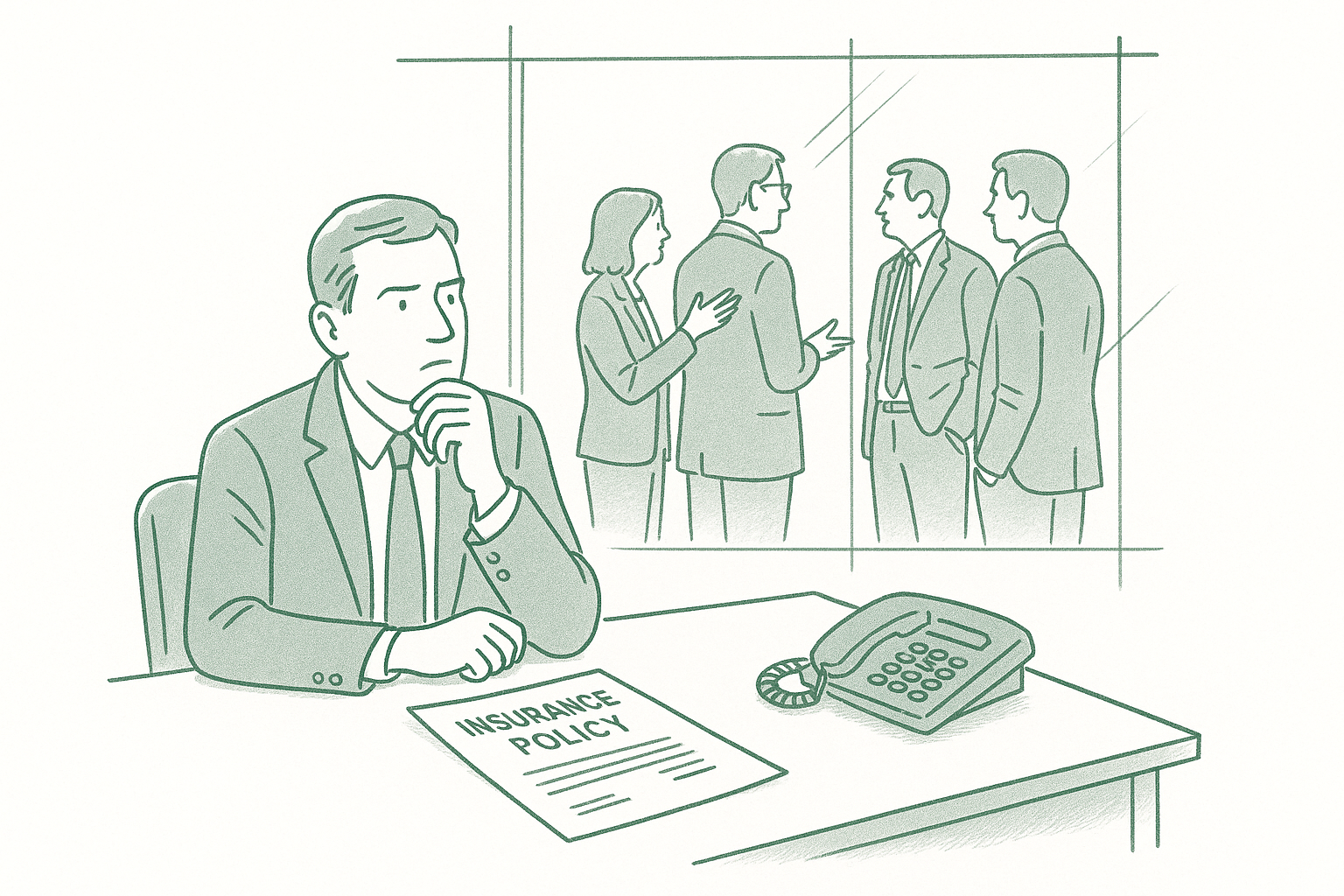
There are roughly 1.4 million insurance agents and brokers working in the United States. Over 430,000 agencies and brokerages. An entire industry built on trust, relationships, and the ability to sit across from someone and explain risk in human terms.
And most of them are doing it completely alone.
The numbers are brutal
The attrition rate for new insurance agents is one of the worst in any profession. Industry estimates put the first-year failure rate between 70% and 90%. By year three, roughly 89% have left the business entirely. The agents who survive past five years are the statistical minority, not the norm.
And the survivors aren't doing great either. Liberty Mutual's 2025 Independent Agents at Work Study surveyed over 1,200 agency employees and found that half report feeling burned out. 87% say their workload increased over the past year. More than half — 51% — feel overwhelmed by demands they can't control: harder markets, tighter carriers, more compliance, more technology to learn, and clients who expect instant answers.
The most telling statistic: burned-out agents are twice as likely to start looking for another job. 39% of frontline staff have actively considered leaving. The agencies that can't solve this problem aren't just losing talent — they're losing the institutional knowledge and client relationships that take years to build.
Why insurance is structurally isolating
Independent agents operate inside a strange paradox. Their job is fundamentally relational — they build trust, advise on coverage, manage renewals — but the business side of the work is profoundly solitary. Pricing decisions, hiring, carrier negotiations, E&O exposure, marketing strategy, tech stack choices. These are high-stakes calls that most agents make without a sounding board.
Captive agents have a corporate structure around them, but that structure exists to serve the carrier's interests, not the agent's. Independent agents have freedom, but freedom without peers is just guessing alone. The research on isolated decision-making is clear: people who make high-stakes choices without trusted feedback consistently underperform people who don't.
The independent P&C agency market shrank from 40,000 agencies in 2022 to 39,000 in 2024. Consolidation is accelerating. Larger brokerages are absorbing smaller shops. The agents most at risk are exactly the ones with the least structural support — smaller agencies with one to five people, operating in competitive local markets, trying to figure out growth strategy between claims calls.
What peer groups actually solve
The insurance agents who've joined mastermind groups describe the same thing: the moment they realized they weren't the only one struggling with a specific problem. Carrier appointment challenges. Staffing a CSR role when margins are thin. Whether to invest in a new management system or stick with what works. How to handle a producer who isn't producing.
These aren't problems you can Google. They're judgment calls that require context — and context comes from people who've made the same call in their own agency. That's the structural advantage of a peer group: not advice from above, but accountability and pattern recognition from beside.
The research on relationship depth explains why conferences and industry associations don't fill this gap. You can attend every Big I convention, join every Facebook group for agents, subscribe to every podcast. None of it replaces a small group of peers who know your book size, your staffing situation, your market, and your actual numbers — and who ask you, every session, whether you did the thing you said you were going to do.
The agencies that talk to each other win
The Liberty Mutual study found one factor correlated with meaningfully lower burnout: agencies that invested in peer connection and communication tools. Not wellness programs. Not pizza parties. Not flexibility policies — 87% already had those. The agencies where people felt less burned out were the ones where agents weren't solving problems in isolation.
This maps directly to what the peer group research shows across every industry GoodGrowth has studied. Psychological safety — the ability to say "I don't know how to handle this" without career consequences — is the single strongest predictor of group performance. In insurance, where the culture prizes self-reliance and where admitting uncertainty can feel like admitting weakness, that kind of safety rarely exists inside the agency. It has to be built outside it.
Organizations like AgencyFocus, Agency Intelligence, and Michael Jans' Insurance Mastermind have built businesses around this exact insight. They connect agency owners across geographies — no competitive overlap — into structured groups that meet regularly, share real numbers, and hold each other to commitments. The format works because insurance agency problems aren't unique to any one market. Just like in real estate, the challenges are structural, not local. What changes is whether you're solving them alone or with people who've already solved them.
The real cost of going it alone
Insurance is a retention business. Client retention drives revenue. Agent retention drives client retention. And the Liberty Mutual data shows that the traditional playbook for keeping agents — work-life balance programs, flexibility, wellness initiatives — isn't working anymore. Burnout rates remain stubbornly high despite agencies doing all the "right" things.
What's missing isn't another benefit. It's structure that produces outcomes. A room where an agency owner can say "I'm drowning and I don't know what to change" and hear back from five people who were drowning last year and found their way out. Not a webinar. Not a podcast episode. A conversation with people who know your name and remember what you said last month.
90% of new agents quit within a year. The industry treats this as a training problem. It's not. It's an isolation problem. The agents who last are the ones who find their room.
GoodGrowth builds structured peer groups for insurance agents and agency owners who are tired of solving every problem alone. Small groups. Consistent structure. People who get it. Read the full history of peer groups, or see what happens when no one asks "did you do it?"